
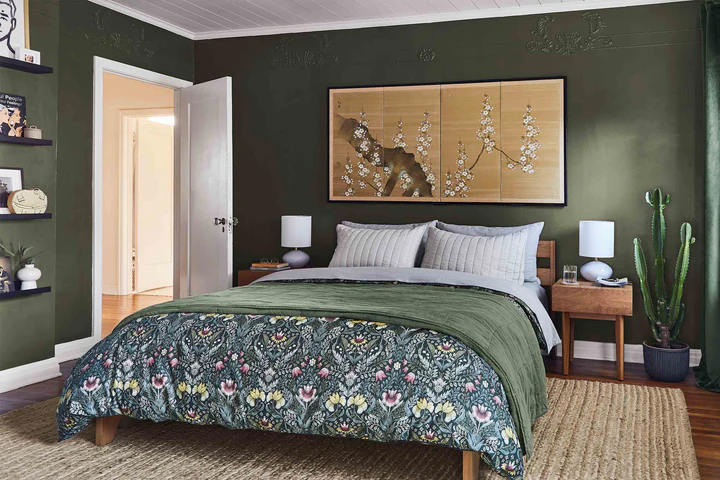
Color trends come and go, but what actually works in a South Florida home depends heavily on one thing most national trend reports don't account for: our light. Bright, direct sun for most of the year changes how colors read on the wall compared to a home in a cloudier climate. Here are the directions we're seeing homeowners gravitate toward in 2026, and why they tend to work well here.
1. Warm neutrals replacing stark white
Pure white and cool gray dominated interiors for years, but many homeowners are shifting toward warmer neutrals — soft greiges, warm taupes, and creamy off-whites. In a room that gets strong natural light through most of the day, a warm neutral avoids the flat, sterile look that stark white can take on under intense sun, while still feeling clean and versatile.
2. Deep greens as an accent
Rich, saturated greens — think forest, olive, and hunter tones — are showing up in bedrooms, dining rooms, and home offices as accent walls or full-room statements. They pair naturally with Florida's greenery visible through windows and read as grounded rather than trendy, which is part of why they've had staying power over the past few years rather than fading quickly.
3. Coastal blues, done with restraint
Blue has always had a place in Florida homes, but the 2026 take leans toward muted, dusty blues rather than bright nautical tones — think fog blue or a soft slate rather than a primary navy. These work especially well in bathrooms and bedrooms where a calmer, more sophisticated coastal feel is the goal.
4. Terracotta and warm earth tones
Warm clay, terracotta, and rust tones are appearing more in kitchens, entryways, and dining spaces. They complement natural materials — wood tones, woven textures, stone counters — and hold up visually against strong daylight without washing out the way some cooler tones can.
5. Soft off-whites for ceilings and trim
Even as wall colors get bolder, many homeowners are moving away from bright white trim toward a softer off-white that ties better with warmer wall tones. It's a small detail, but it changes how cohesive a whole room feels once the painting is finished.
Why Florida light changes everything
A color chip in a paint store, under fluorescent lighting, almost never looks the same once it's on your wall at home. South Florida's intense, direct sunlight tends to brighten and warm up colors — a color that looks moderate on a swatch can read much more vivid on a west-facing wall by mid-afternoon. North-facing rooms, by contrast, get cooler, more diffused light and can make the same color look flatter or grayer than expected.
How to actually test a color before committing
- Paint a sample swatch at least two feet by two feet directly on the wall, not on a poster board you move around the room.
- Check it at three different times of day — morning, midday, and early evening — since the shift in light can be dramatic.
- Look at it alongside your existing flooring, cabinetry, and trim, not in isolation.
- Live with the swatch for at least two or three days before making a final call on a full room.
Not sure which direction fits your home?
Get a Free QuoteWe're happy to walk through color options and provide samples as part of any interior estimate — see our interior painting page for what's included. You can also browse real before-and-after results from South Florida homes in our project gallery for inspiration before you settle on a direction, or read our guide on interior painting costs if you're budgeting for the project alongside your color choices.